Ethnicity Guesser
A free daily ethnicity quiz and ethnoguessr-style face game. Look at a composite face, drop a pin on the world map, and learn about 209 human phenotypes — no sign-up needed.
What is an ethnoguessr game?
Ethnoguessr is a portmanteau of ethnicity and GeoGuessr. It describes a category of browser game where you look at a face — usually a composite average built from many photos of a population — and guess where on the world map that face is most common. Ethnicity Guesser is a free daily ethnicity quiz built in that tradition, with a 209-entry phenotype encyclopedia behind it.
Each round of the ethnicity quiz works the same way: a composite face appears, you drop a pin on the world map where you think that phenotype most commonly appears, and the game scores you by the distance between your pin and the reference region. A near-perfect pin scores high, a wrong-continent guess scores near zero. After ten questions you see your total on a 5000-point scale, the correct locations, the distance errors, and a short anthropology description for each round.
Ethnicity Guesser is not a DNA test and not a racial identification tool. The phenotypes describe broad historical appearance patterns from roughly 1,500 years ago, not modern nationality, genetic ancestry, or personal identity. They are a geography and anthropology learning aid, and the game is built for curiosity-driven exploration of how human populations vary across the world.
Featured human phenotypes
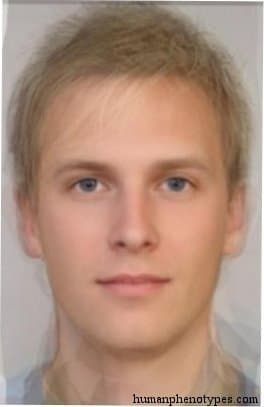
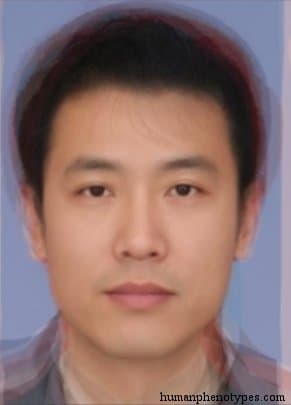
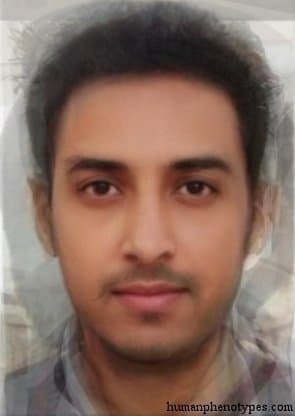
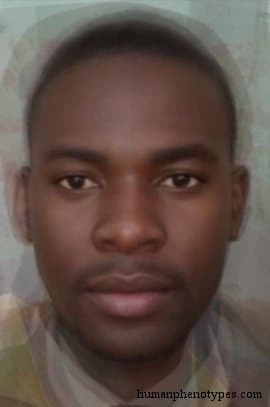
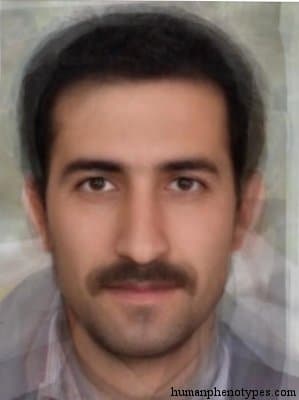
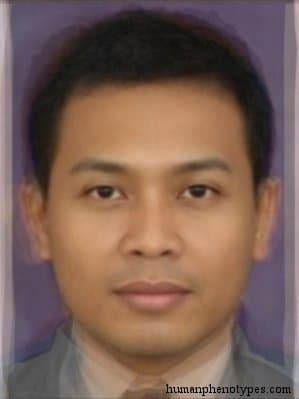
Six entries from a catalog of 209 human phenotypes, each with a composite average face, region of origin, and a short anthropology description. Click any face to read its full entry, or browse the complete phenotype encyclopedia.
Three ways to play the ethnicity quiz
Pick the pace that fits your mood. Every mode uses the same simple loop — face, map, score — and every mode is free with no sign-up. Classic Daily is the main daily ethnicity quiz, Challenge is a no-timer marathon through the full phenotype catalog, and Countries Mode is a lighter, geography-first variant using country flags.
Classic Daily
Ten new composite faces every day, identical for every player. The main daily ethnicity quiz mode — the best choice for a quick five-minute routine, friendly score comparisons, and building a daily streak.
Challenge Mode
Thirty-eight phenotypes, no timer, no daily limit. A quiet marathon through the full phenotype catalog for players who want to study every face without the clock.
Start Challenge →Countries Mode
Forty-eight country flags on the map instead of composite faces. A lighter, geography-first way to play the ethnicity quiz for players who want a softer entry point.
Play Countries →Guess countries by flag
Forty-eight country flags on the world map, paired with a short country profile and an average face where a public composite exists. Click any flag to read about that nation, then test yourself in Countries Mode — a geography-first variant of the ethnicity quiz.




How the ethnicity quiz works
One loop, about five minutes a round. A little anthropology mixed into a geography game — built for curiosity-driven exploration, not for assigning anyone a race or identity.
See the composite face
Study the composite average face — skin tone, hair form, facial structure, and other visible phenotype traits — for clues about its historical region of origin.
Drop your pin
Click the world map where you think that phenotype most commonly appears. The closer your pin lands to the reference region, the higher your score.
Learn the answer
See the real region, the distance error, your round score, and a short anthropology description of the phenotype — built as a learning aid, not a label for any person.
Latest from the blog
Essays on the science behind the game — the genetics of light eyes, what a phenotype really is, and how to read human diversity honestly.
- AI & Technology7 min read
AI Ethnicity Test: What a Measurement Would Require
A laboratory test has a reference standard, a defined construct and a published error bar. A face-based ethnicity tool owns none of those, and the output it does return is a ranking rather than a measurement.
- Games7 min read
Ethnicity Do I Look: A Question About Observers
The phrase is a fragment of a longer question, and its verb points at an observer, not at you. Perception research shows what observers settle in a fifth of a second, and what none of them can read off a face.
- Games7 min read
Ethnicity Guesser vs hbd.gg: Two Ways to Ask a Face
Two sites ask a face to name a place. Here is what each one shows you, where breadth and provenance actually differ, and how to tell which one fits the question you are asking.
Ethnicity Guesser FAQ — frequently asked questions
Quick answers to the questions players ask most about Ethnicity Guesser: how the daily ethnicity quiz works, where the phenotype data comes from, what the score means, and how the site handles privacy and accuracy. If your question is not answered here, reach out through the Contact page.
Yes. Ethnicity Guesser is completely free to play. There is no sign-up, no paywall, and no premium tier. All three game modes (Classic Daily, Challenge, and Countries), the 209-entry phenotype encyclopedia, and the country average face gallery are open to everyone on every device.
The phenotypes are based on historical anthropology references and reflect distributions from roughly 1500 years ago, not modern borders or DNA ancestry. They describe broad appearance patterns across populations, not individual identity. Treat them as a geography and anthropology learning aid, not a genetic test. Where sources disagree, we default to the more conservative description.
Appearance. A phenotype is a recurring set of visible physical traits such as skull shape, skin tone, hair form, and eye color, not a genetic haplogroup and not a genealogy. A person who visibly matches a phenotype may carry DNA from many different populations, and a person whose DNA matches a population may not visibly match the associated phenotype. If you want your DNA ancestry, you need a genetic test.
No. Ethnicity Guesser is not suitable for determining individual racial or ethnic identity. Composite faces and phenotype descriptions describe broad patterns across populations, not any specific person. You cannot use this site to look at a real person, including yourself, and assign them a race, ethnicity, or nationality. Attempting to do so misuses the site.
The phenotype catalogue is compiled from publicly available anthropology references, with the primary source being Human Phenotypes (humanphenotypes.net). Country average faces are synthesized from composite face projects hosted on Wikipedia and related public archives. For East Asian population history we cross-reference peer-reviewed research, including work from the Fudan University Jin Li group, and the national ethnic compendia published by China's State Ethnic Affairs Commission. Full details are on the Editorial Policy page.
Classic Daily serves the same ten faces to every player each day. A composite face appears on screen, you click where you think that phenotype most commonly appears on the world map, and the game scores you by distance. After ten questions you see your final score on a 5000-point scale, the correct locations, the distance errors, and a short phenotype description for each round. Your daily streak is stored locally in your browser.
Only your daily streak and local game progress, and only in your own browser through localStorage. Nothing leaves your device, there is no account, and clearing your browser data erases it completely. For traffic measurement the site uses cookie-free Plausible Analytics plus Google Analytics 4, which sets first-party measurement cookies. See the Privacy Policy page for the full details and opt-out options.
Not yet. The AI face analysis tool that would let you upload a photo is coming soon. It has been deferred from the initial launch to make sure the privacy and educational framing are right before it ships. When it launches, uploaded photos will be processed transiently and never persisted on our servers, as described in the Privacy Policy.
Each question is scored by distance with a distance-decay function plus a small speed bonus, on a 5000-point scale across a full game. A near-perfect pin scores around five hundred points for that question and a wrong-continent guess scores near zero. The score rewards both knowing the right region and placing your pin precisely, so a confident guess that lands two thousand kilometers off still scores poorly.
The phenotype encyclopedia and country face gallery are reviewed on a rolling basis and re-published whenever a correction is accepted. New phenotype entries and new country faces are added when we find a reliable public source for them; we do not publish entries to fill gaps when the underlying data is thin. If you have a source suggestion, send it through the Contact page.
No. Ethnicity Guesser is an educational anthropology project, not a racial identification tool. Every entry explicitly states that phenotypes describe historical appearance patterns from roughly 1500 years ago, not modern identity, and the site is not suitable for determining individual racial or ethnic identity. We remove language that reads as stereotyping rather than geographic description during the editorial review process. If you spot content that crosses that line, please report it.
Email hello@ethnicity-guesser.com with the page URL, the specific text you disagree with, and a verifiable source. Reports with verifiable sources are prioritized over reports without them. We read every report and route accepted corrections through the review process described on the Editorial Policy page.
Disclaimer
Ethnicity Guesser is an educational geography and anthropology game. Phenotypes and country average faces describe historical appearance patterns from roughly 1,500 years ago, not modern nationality, DNA ancestry, or individual identity. See our full disclaimer and editorial policy.